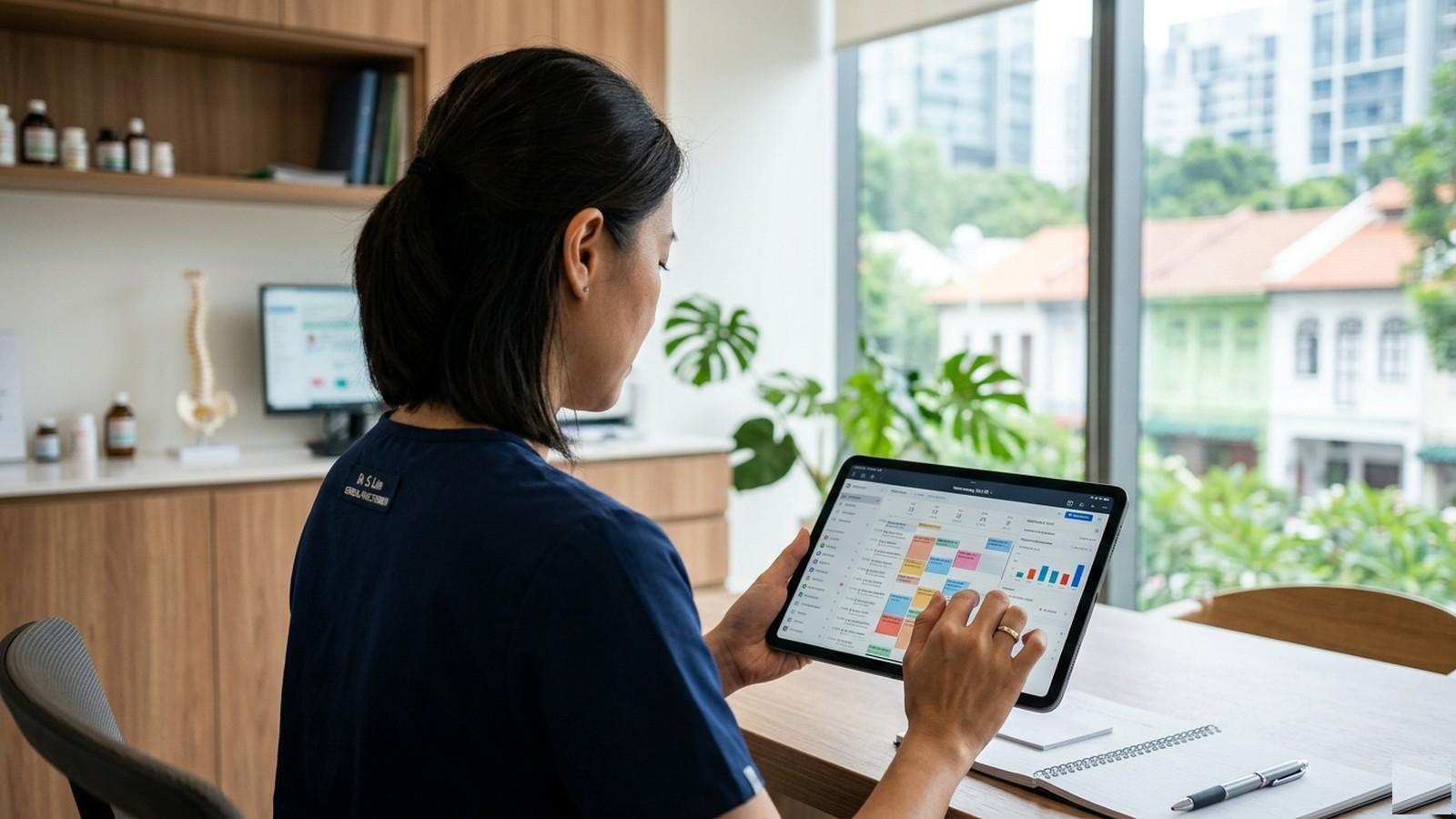
The nature of patient care in Singapore is changing. A consultation no longer begins and ends at the clinic door. What happens between appointments, how patients manage their condition, adhere to treatment, and report new symptoms, directly influences their outcomes. Yet, traditional phone calls and emails often create friction and administrative bottlenecks. Secure patient texting software presents a structured way to bridge this gap, moving care from an episodic model to one of continuous, managed engagement.
This isn't about casual messaging. It's about using a secure, compliant platform to deliver and receive specific clinical information efficiently. This shift is crucial for managing chronic conditions, ensuring post-procedure recovery, and improving overall care coordination.
Why Between-Visit Communication Matters
The time between clinic visits is often a black box for clinicians. Patients may forget verbal instructions, misinterpret medication schedules, or fail to recognize a side effect that needs attention. Small issues can escalate. Structured communication tools can change this dynamic entirely. They create a clear, documented channel for specific types of information exchange. This isn't a new idea. The push for better tools to improve patient-doctor dialogue is a constant in clinical research. For example, a study published in Tumori detailed the development of an open-source tool to help patients report symptoms and experiences in clinical trials more effectively. While designed for research, the principle is the same for daily practice: giving patients a simple, structured way to communicate provides clinicians with better data. Texting platforms operationalize this by automating check-ins, delivering educational content, and gathering patient-reported information systematically.
Evidence on Remote Engagement Models
Can care be delivered effectively with less face-to-face time? For certain patient groups, the answer is yes. It depends on the model. The key is replacing lower-value in-person checks with high-value remote touchpoints. A landmark project reimagining prenatal care offers powerful insights. The study, published in Mayo Clin Proc, explored a model for low-risk pregnancies that combined traditional visits with remote monitoring and online resources. It was found to be safe and highly valued by patients. It didn't eliminate the doctor; it focused the doctor's time where it was most needed. This demonstrates that well-designed remote engagement, supported by technology, can enhance the patient experience and maintain clinical safety. Patient texting software is the engine for this kind of model. It enables practices to send scheduled blood pressure check reminders, ask about post-medication symptoms, or confirm pre-procedure fasting instructions without requiring a phone call for every interaction.
Streamlining Clinic Operations
The most immediate benefit of a patient texting platform is logistical. It's simple. Automated appointment reminders drastically reduce no-show rates. This improves clinic efficiency and ensures other patients can get timely appointments. But the operational benefits go deeper. Instead of staff spending hours on the phone confirming appointments or giving repetitive pre-visit instructions, the software handles it. This frees up clinical and administrative staff to focus on more complex patient needs. The system can send a secure link to a pre-consultation questionnaire the day before a visit. The patient completes it at their convenience, and the information is ready for the doctor, making the consultation itself more focused and productive. This moves administrative tasks out of the valuable, limited time of the in-person visit.
Enhancing Medication Safety
Medication adherence and safety monitoring are persistent challenges in healthcare. Once a patient leaves with a prescription, ensuring they take it correctly and report adverse effects is difficult. Texting platforms can provide a crucial safety net. They can send automated reminders to take a medication. More importantly, they can send follow-up messages asking about specific, known side effects. A systematic review on medication safety in the Ann Pharmacother highlights the importance of understanding a drug's real-world safety profile. Automated check-ins contribute to this by creating a simple feedback loop. A message asking a patient to report any new dizziness or rash after starting a new treatment can flag a potential issue days before it might have otherwise been mentioned. It's vital to remember that patient-reported logs provide context for the care team but don't replace a formal clinical assessment. The software must clearly direct patients to seek emergency care for severe symptoms and follow their specific medication instructions.
Is patient texting secure?
Yes, when using a medical-grade platform. Unlike standard SMS or consumer apps like WhatsApp, these systems are designed to comply with data protection laws like Singapore's PDPA. They use encryption and secure servers to protect patient health information.
Does this replace phone calls?
No, it complements them. Texting is for asynchronous, non-urgent information like reminders, confirmations, and simple check-ins. This frees up phone lines for patients with more complex questions or urgent medical needs that require a direct conversation.
What if there is an emergency?
Patient texting software is never for emergencies. Any reputable platform will include clear disclaimers and automated replies that direct patients to call the clinic's emergency line or proceed to an A&E for any urgent medical concerns. This boundary must be clearly established with patients from the start.
Ultimately, patient texting software is more than a convenience tool. When implemented correctly, it becomes a clinical instrument that structures communication, improves adherence, and provides clinicians with a clearer picture of a patient's health between visits. It shifts patient management from being purely reactive to proactively engaged.