Care for a chronic condition doesn't stop when you leave the clinic. The weeks and months between appointments are where health is truly managed. It's also where crucial information often gets lost. A patient texting platform helps close this gap. This isn't about casual messaging or replacing face-to-face consultations. It’s a structured, secure way for your care team to gather specific updates and provide timely support, transforming how chronic conditions are managed in Singapore.
Beyond Appointment Reminders
For years, clinic communication meant a phone call or a simple SMS reminder. That's changing. Modern patient platforms use two-way, automated texting to do much more. They're designed to collect clinically relevant information systematically. This isn't a conversation in the traditional sense. It's a way to log key metrics and symptoms as they happen. This shift turns a simple communication tool into a powerful health information system. Improving these routine systems is critical for strengthening healthcare management, as it ensures that decisions are based on current, real-world data, not just on memory from a visit three months ago. That distinction is real. Stronger information systems lead to better health outcomes, a conclusion supported by extensive analysis from a study published in Cochrane Database Syst Rev.
The Evidence for Digital Nudges
Does this type of regular, low-touch communication actually work? The evidence says yes. Digital health interventions, which often rely on text-based prompts and support, have shown measurable success in managing long-term conditions. It's about providing the right information or asking the right question at the right time. This helps reinforce positive behaviors and allows for early clinical intervention when things are going off track. For instance, a major randomized clinical trial focused on patients with type 2 diabetes found that a mobile health intervention significantly improved glycemic control over a six-month period. Patients in the intervention group received messages supporting medication adherence, diet, and physical activity. As documented in a study published in JAMA Netw Open, this regular contact helped patients better manage their condition between appointments.
The principle extends beyond managing existing disease. It also works for prevention. In another large trial, a digital health intervention for new mothers and their infants helped prevent childhood obesity. This program delivered tailored advice and support through a digital platform, showing that consistent, timely guidance can positively shape health behaviors from an early age. The findings from a study published in JAMA demonstrate that these digital tools are effective for proactive and preventative care, not just for managing established illness.
Closing Gaps in Chronic Care
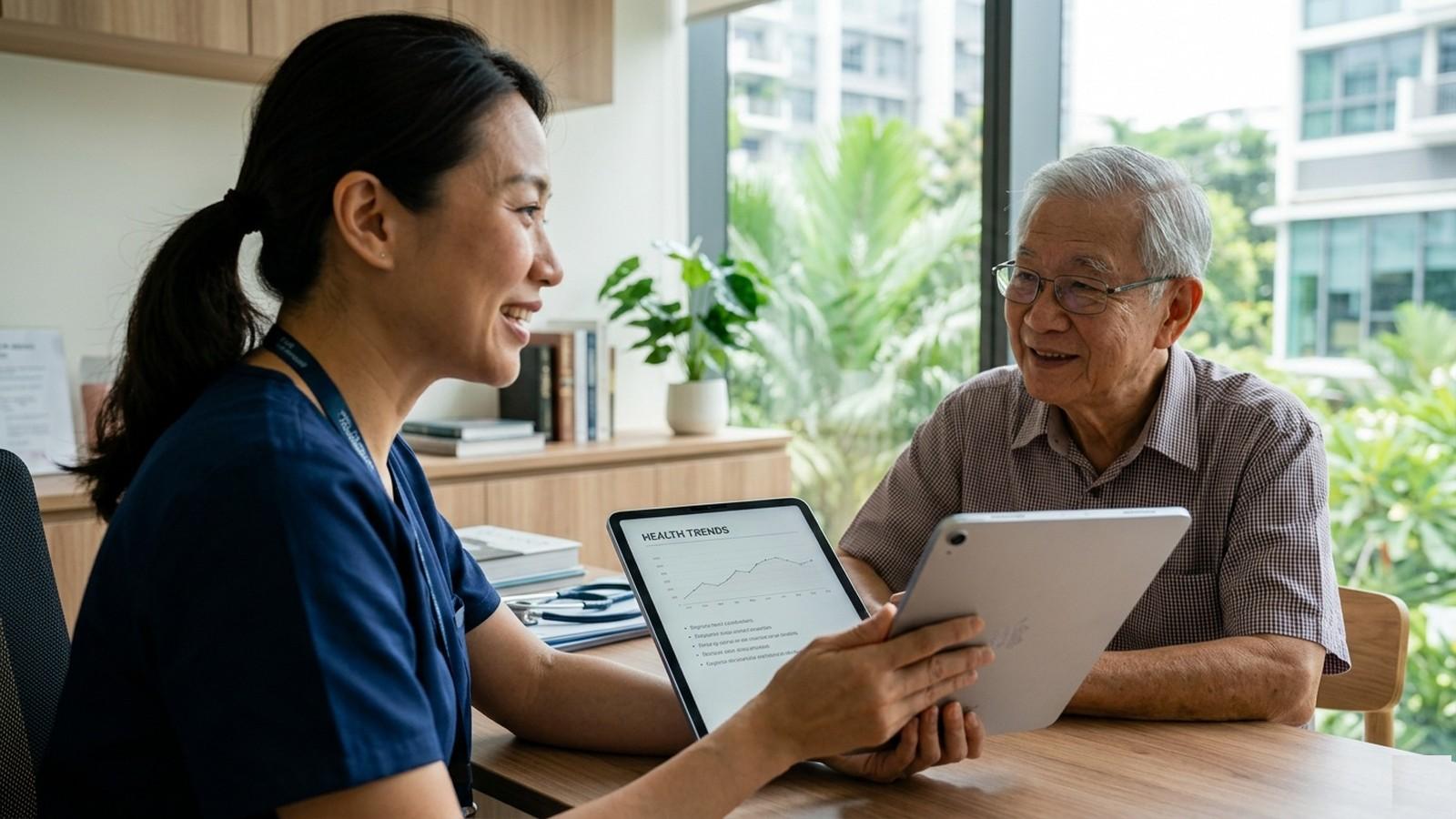
So what does this mean for a patient in Singapore managing hypertension or diabetes? It means your care team has a clearer picture of your health status between visits. Instead of relying on a logbook you might forget to fill out, you could receive an automated text once a week asking for your blood pressure reading. Or, if you've just started a new medication, a platform might check in to ask about specific side effects. This data flows directly and securely to your clinical team. It allows them to spot negative trends early. A gradually rising blood pressure over three weeks is a clear signal that might otherwise be missed until your next scheduled appointment. This process strengthens the routine health information systems that are foundational to good clinical management, a point reinforced by clinical trial data in Cochrane Database Syst Rev.
Supporting Patient Self-Management
These platforms don't just help doctors; they help patients. Regular, structured check-ins serve as a gentle reminder of self-care tasks. It prompts you to take a measurement, consider your symptoms, or stick to your care plan. This engagement is a key part of successful chronic disease management. It encourages you to be an active participant in your own healthcare. The success of mobile health interventions, like the one for diabetes patients, hinges on this very principle. By providing consistent support and fostering accountability, these tools empower patients to maintain control of their health, as shown by clinical trial data in JAMA Netw Open. This isn't about being monitored constantly. It's about having a supportive tool that makes self-management easier and more effective.
Is my health data secure?
Yes. Professional healthcare platforms use encrypted channels that comply with Singapore's Personal Data Protection Act (PDPA). This is very different from standard SMS or consumer messaging apps like WhatsApp, and it ensures your private health information remains confidential.
Will I get too many messages?
No. The communication is scheduled and clinically driven, not a constant stream of conversation. You might receive a few specific, automated prompts per week or month, depending entirely on your doctor's care plan for you.
Does this replace a doctor's visit?
Absolutely not. Patient texting platforms are designed to complement, not replace, your regular consultations. They provide your doctor with better, more consistent information to make your face-to-face appointments even more productive.
The key takeaway is that patient texting platforms transform the time between clinic visits. That period is no longer a blind spot. It becomes an active part of your care, providing your clinical team with the data needed to offer proactive support and helping you achieve better long-term health outcomes.