

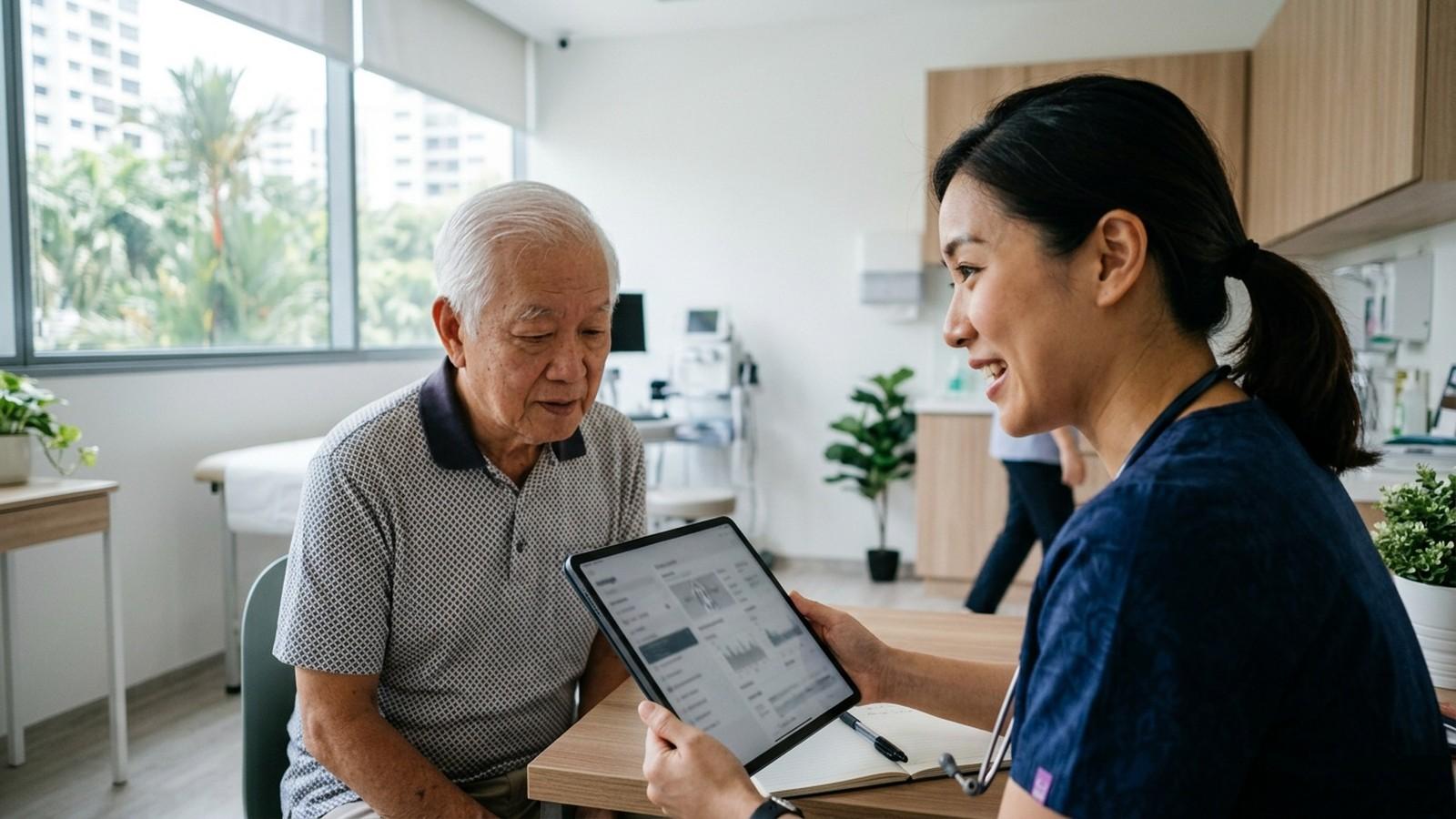
Care doesn't just happen inside a clinic. For most patients in Singapore, particularly those managing chronic conditions or recovering from surgery, the real work happens in the days and weeks between appointments. That's where patient engagement software comes in. It isn't just a scheduling tool or a message portal. It's a clinical bridge designed to close the gap between visits, turning passive waiting periods into active phases of monitoring and care.
This technology shifts the model from episodic check-ups to continuous health management. By creating a structured channel for communication and data collection, clinics can gain a much clearer picture of a patient's health status over time, leading to more informed decisions and timely interventions.
Capturing Data Between Visits
At its core, patient engagement software is about collecting relevant information directly from the patient in their own environment. This can include patient-reported outcomes (PROs), biometric readings from connected devices, and logs of medication adherence or physical therapy exercises. It’s a fundamental change. The patient becomes an active participant in creating their own longitudinal health record. For instance, after joint replacement surgery, a patient might use an app to log their pain score on a 0-10 scale, record their range of motion, and confirm completion of prescribed exercises. This kind of consistent tracking is invaluable. A scoping review featured in the J Clin Nurs confirms the growing use of mobile technology to involve patients directly in their post-arthroplasty rehabilitation, providing clinicians with vital feedback on their progress.
From Raw Data to Clinical Insights
The software doesn't just gather data; it organizes it for clinical use. It can identify trends that a busy clinician might otherwise miss. A gradual upward creep in a patient's reported daily pain scores can trigger an alert to the care team. A pattern of high blood glucose readings after specific meals gives a diabetes educator concrete information to act on. This structured data provides context that a brief verbal summary during an appointment simply can't match. Artificial intelligence is beginning to supercharge this process. As a study published in Am J Med explains, AI can analyze complex data sets, like continuous glucose monitoring, to predict potential issues before they become acute. It's important to be clear: these patient-generated logs provide valuable context for the care team, but they never replace formal physician assessments or diagnostic examinations.
Wearables and Real-World Evidence
The integration of consumer wearables is another significant development. Smartwatches and other personal health devices are common in Singapore, and they collect a stream of real-world data on activity levels, sleep patterns, and heart rate. Some devices can even perform an electrocardiogram to detect irregularities. This isn't science fiction. Emerging a study published in J Cardiovasc Electrophysiol shows how smartwatch applications are being used for atrial fibrillation detection. While a watch alert isn't a formal diagnosis, it effectively prompts a person to seek proper medical evaluation, potentially catching a serious condition early. Integrating this data flow into a patient engagement platform gives the clinical team a more complete view of a patient's health beyond the clinic's walls.
Improving Chronic Disease Management
For chronic conditions like diabetes or hypertension, this technology is transformative. Instead of making medication adjustments based on a single reading taken once every few months, clinicians can see patterns over time. This allows for far more precise and timely changes to a patient's care plan. The system can also deliver personalized educational content. For example, a patient whose blood pressure readings are consistently high in the mornings might automatically receive information about sodium intake at breakfast. It supports the very principles of personalized medicine discussed in diabetes care research, using a patient's own data to guide them towards better self-management, as outlined by clinical trial data in Am J Med.
Enhancing Post-Surgical Recovery
Recovery from surgery doesn't follow a predictable path for everyone. Patient engagement platforms provide a safety net and a guide during this period. After a procedure, the software can deliver daily instructions, video demonstrations of exercises, and reminders. Patients can report back on their progress and flag concerns, like signs of a potential wound infection, for prompt review. This two-way communication allows for early intervention if a patient's recovery stalls or if complications arise. As highlighted by research published in J Clin Nurs, this active engagement through technology can be a key component in modernizing and improving rehabilitation pathways, ensuring patients feel supported even after they've returned home.
Is this software secure?
Yes. Clinical software platforms used by healthcare providers in Singapore must comply with stringent data protection regulations, such as the Personal Data Protection Act (PDPA). All patient information is encrypted, and access is restricted to authorized members of the care team.
Does it replace my doctor visits?
No, it is designed to enhance them. The data collected between appointments helps your doctor have a more complete and accurate understanding of your health status, making your face-to-face consultations more focused and efficient.
What if I'm not good with technology?
Reputable patient engagement platforms are designed with simplicity and ease of use in mind. Clinics typically provide clear instructions, onboarding, and technical support to ensure patients can use the tools comfortably and effectively.
Ultimately, patient engagement software makes the time between appointments a visible and active part of the treatment plan. For clinics, it's a powerful tool for delivering more responsive and personalized care, while for patients, it provides a direct line to their care team and a greater sense of control over their own health.